
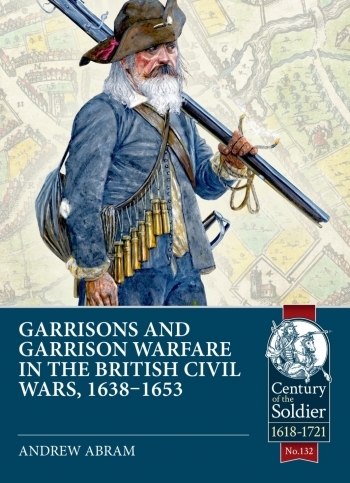
Garrisons and Garrison Warfare in the British Civil Wars, 1638-1653
Drawing on extensive archival research and published primary sources, Garrisons and Garrison Warfare in the British Civil Wars examines the role of garrisons—their composition, logistics, financing, armament, and clothing—with particular attention to Worcester, Lichfield, and Windsor.
Military histories of the British Civil Wars have often focused on battles, campaigns, and field armies, neglecting the organisation and function of garrisons, as well as the significance of sieges and garrison warfare. Yet this overlooks a defining feature of the conflict: the most frequent forms of combat were not set-piece engagements, but sieges and assaults on fortified positions.
Apart from the formation of the New Model Army in 1645, substantial numbers of both Royalist and Parliamentarian troops, along with considerable military resources, were committed to garrisoning cities, towns, and ports. The provisioning and maintenance of these garrisons frequently imposed heavy burdens on local civilian populations, who were compelled to supply taxes, goods, and labour.
Garrison troops also played a dynamic role in field operations—marching out to reinforce other forces before returning to their strongholds for protection. Urban centres and their garrisons further controlled trade and the movement of people by dominating the surrounding hinterland and key transportation routes.
By addressing this overlooked dimension of the wars, this study offers a valuable contribution to our understanding of garrison troops and the critical activities they undertook.
Military histories of the British Civil Wars have often focused on battles, campaigns, and field armies, neglecting the organisation and function of garrisons, as well as the significance of sieges and garrison warfare. Yet this overlooks a defining feature of the conflict: the most frequent forms of combat were not set-piece engagements, but sieges and assaults on fortified positions.
Apart from the formation of the New Model Army in 1645, substantial numbers of both Royalist and Parliamentarian troops, along with considerable military resources, were committed to garrisoning cities, towns, and ports. The provisioning and maintenance of these garrisons frequently imposed heavy burdens on local civilian populations, who were compelled to supply taxes, goods, and labour.
Garrison troops also played a dynamic role in field operations—marching out to reinforce other forces before returning to their strongholds for protection. Urban centres and their garrisons further controlled trade and the movement of people by dominating the surrounding hinterland and key transportation routes.
By addressing this overlooked dimension of the wars, this study offers a valuable contribution to our understanding of garrison troops and the critical activities they undertook.
Price:
NZ$ 69.99
Publisher:
Bind:
Paperback
Pages:
224
Dimensions:
248 x 180
Publication Date:
9 December 2025
Availability Date:
31 August 2026
ISBN:
9781804518373
Stock Status
In Stock
